
Last quarter, I wrote about subtraction and the value of clearing our plate before we add anything to it. What I didn’t fully anticipate was what would happen when I started to follow my own advice. Because when you remove the noise to create space, what’s left isn’t always silence. Sometimes, it’s a question: Now that I have the room, what am I actually choosing?
That question has been sitting with me all of 2026, because although subtraction definitely gets you to the starting line, the real shift happens when we stop making trade-offs by default and start making them on purpose.
Barrett Brooks, one of this quarter’s interviewees, helped me find the language for this. In our conversation, he drew a distinction between implicit and explicit trade-offs. The implicit trade-offs we make often times lead to suffering. The cause being the friction between the distinction of the helplessness of the “this is happening to me” mindset and the power that comes from the “I chose this because it serves something I care about” mindset. Often, the latter can reframe your whole experience for the better.
Bree Groff, this quarter’s other guest, arrived at a surprisingly similar place from a completely different direction. She’s spent years studying why people don’t enjoy their work, and in talking with her, it reinforced in me something I’ve been thinking about for a while. Many of us never actually intentionally decide to have a good day. Instead, we wait for the conditions to be right. We assume enjoyment is the reward for meaningful work, rather than a choice we can make within any work we do. Meanwhile, we fill our calendars to the edges, valorize busyness, and then wonder where our aliveness went.
The overlap between the wisdom both of these folks shared illuminates a common blind spot: we sometimes confuse suffering with seriousness. Somewhere along the way, we started treating discomfort as proof that we’re doing something worthwhile, and (unfortunately) ease as proof that we’re not trying hard enough. Barrett said it plainly in our conversation: “There is no inherent value in suffering.” And Bree made a point that I think gets at the same idea from the work side: “We don’t get paid because work is painful. We get paid because we create value. The pain is entirely optional.”
To be clear, neither of them is saying life should be effortless. And it’s important to note the context of Bree’s assertion; she’s perfectly aware that for many, enduring painful circumstances is a short-term reality because of life circumstances. But what I took away from both conversations is that we often have more agency than we act like we do. In fact, the quality of our days is usually less about what’s on our plate and more about whether we’re paying attention to how we’re eating.
So my experiment for this quarter is small but specific: it’s not just saying yes to more fun, it’s being in the moment when fun occurs. And when I catch myself on autopilot, I’m trying to pause long enough to notice what’s actually in front of me. Not because noticing fixes everything. But because, as Barrett reminded me, we’re probably missing 80 percent of the moments in our lives that could be special simply because our minds are off wandering somewhere other than where we are.
Leading thought: Bree challenges the belief that work has to feel like a grind to count. She argues that enjoyment at work isn’t a perk of the lucky few; it’s a choice available to almost anyone. The catch is that you have to protect the conditions for fun to exist. That means guarding your calendar, welcoming a little more humanity into the room, and resisting the quiet pull to fill every open hour with more output.
Action to take: Before your week fills up, place one personal “rock” in your calendar: a non-negotiable block for something that matters to you outside of work: exercise, dinner with your family, an evening with no agenda. Don’t label it in Outlook. Just mark yourself as unavailable. Then notice how much easier it is to protect the time you’ve already claimed (than to have to claw it back later).
Want more? Click here to read my discussion with Bree Groff.
Leading thought: Barrett works with high-performing creator-founders who’ve built impressive businesses but quietly feel like work is running them. One core insight from our talk is that lasting change isn’t a performance hack. It requires confronting how your past patterns show up today, processing what hasn’t been acknowledged, and then actively choosing how you want to move forward. The difference between suffering and growth often isn’t the circumstance; it’s whether the trade-off was made consciously.
Action to take: This week, take a walk with nothing in your hands. No phone, no agenda. Your only job is to notice five things, one per minute. It sounds almost too simple, but Barrett argues that this kind of unstructured noticing is the entry point to presence, and presence is the entry point to everything else.
Want more? Click here to read my discussion with Barrett Brooks.
I feel fortunate that this quarter was filled with lots of rewarding life experience, but undoubtedly the top of the list for me was a father-daughter trip to Jekyll Island, Georgia, where I got to support my daughter at Katelyn Ohashi’s Drop It Like It’s Hot Invitational. With my daughter recently being accepted into early college, it wasn’t lost on me that this may be the last trip of this kind we get to take together.
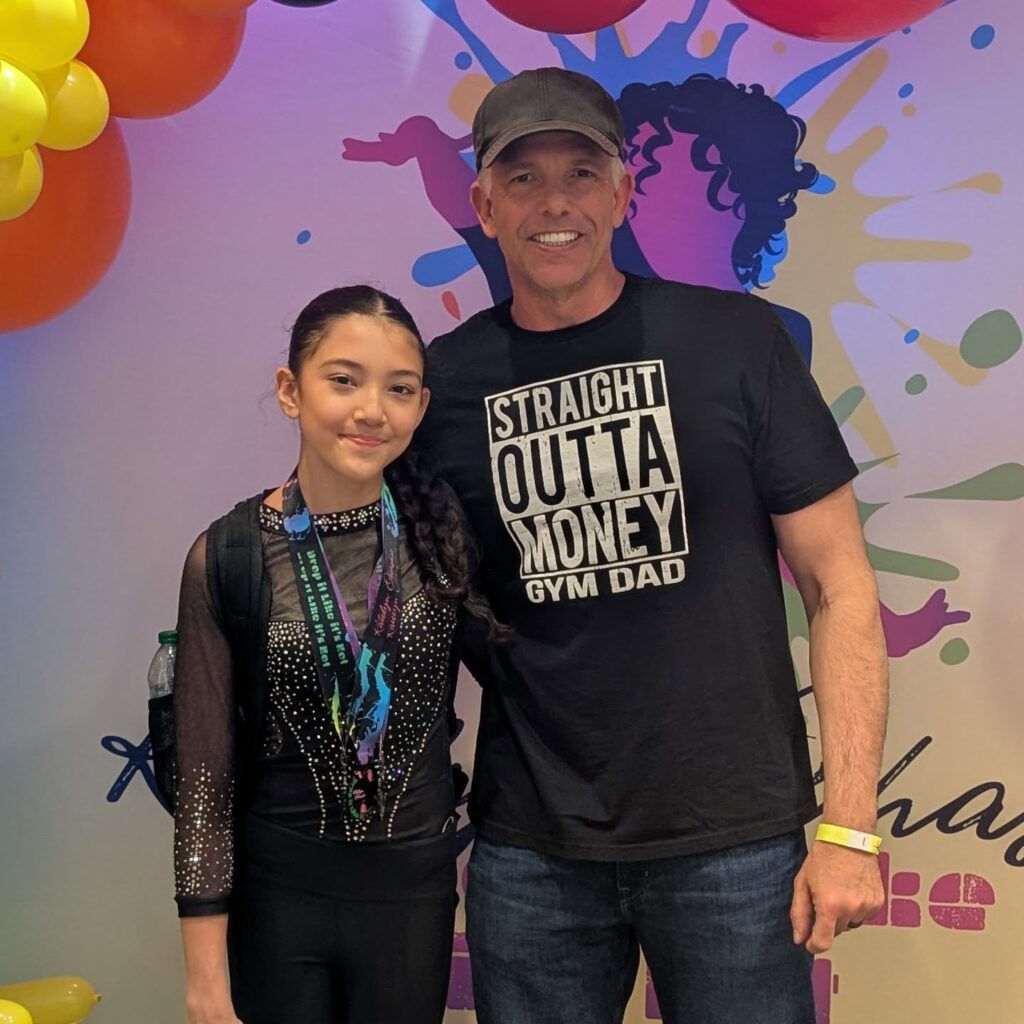

It was the perfect opportunity to practice presence, and I loved every minute of it.
I continue to support various causes through quarterly contribution, which are now being tracked on this scorecard.
If last quarter’s lesson was about making room, this quarter’s lesson is about what you do with that space. Not in a big, dramatic, reinvent-your-life type way. More like: Can you catch yourself in the middle of an ordinary Tuesday and make a slightly more intentional choice? Can you sit with a meal alone and not reach for your phone? Can you walk your dog and just be in that moment?
I’m starting to convince myself that change lives not in our grand plans, but in the moments we choose to be an active participant in the present. Because, as cliché as it sounds, all we really have is Now.
As always, thanks for reading. I’m grateful you’re here. 🙌
Sincerely,
Mike Rucker, Ph.D.
P.S. If you haven’t left a review for The Fun Habit and you wouldn’t mind doing so, I would be grateful. It goes a long way in helping others discover the book.

