If I’ve learned one thing from my years working at the intersection of behavioral science and the pursuit of a good life, it’s this: The folks most successful at building a “good life” didn’t achieve it by perfectly executing a plan. They succeeded because they figured out how to repeatedly return to what mattered most to them in a way that made the pursuit enjoyable enough to sustain.
This showed up in two different but equally useful ways as I learned from this quarter’s thought leaders. For Steve Kamb (founder of Nerd Fitness and author of the new book How to Try Again), it was learning the value of imperfectionism. After years of coaching people through health and fitness, Steve told me one of the biggest predictors of whether someone sticks to their goals isn’t whether they follow a plan. It’s how they respond after they miss. He illustrated it to me this way: If life blows up and you skip a shower, you don’t buy a shower journal or hire a shower coach, you shower the next day and move on. The trick is finding a way to easily return to the work, at whatever capacity makes sense for you, while maintaining grace and flexibility for the days when the work just isn’t going to happen.
For Mia Sundstrom, the new CEO of the National Institute for Play, it was how she found her joy in the experience of gymnastics, even when the external metrics of success weren’t going her way. Mia had been a competitive gymnast from an early age, and she told me about a meet in college where she ended up falling three times (something you seldom see at the collegiate level). The experience led her to question her place in the sport. What brought her back wasn’t gritting harder. It was a piece of advice from her grandfather, Stuart Brown (the pioneer of play science): follow your bliss. This mindset returned her to the parts of the sport that were still hers: the joy of movement, the relationships with her teammates, and the feeling of being fully present in her body. Those were the elements of play still available inside the pressure of competition. Once recentered, achievement and play could happily coexist.
What I love is that, from different angles, Mia and Steve are pushing against the same cultural norm: the belief that life’s good parts should be earned only after the hard part is over. Instead, both provide further evidence that finding our joy is often the key to sticking with the hard parts in the first place. It stops being, “Am I doing enough?” and starts being, “Am I living in a way that keeps me connected to what matters?” In our conversation, Steve framed it this way, “Eventually, I realized don’t just ask yourself, ‘Is the juice worth the squeeze?’ Ask if you even like juice.”
Leading thought: Steve’s work gives people a more humane way to relate to change. Rather than treating every missed workout, stalled project, or failed attempt as evidence that we lack discipline, he argues that falling out of rhythm is part of the process. The real skill is learning how to pause, accept the reality of the moment, adjust the plan to fit the life we are actually living, and try again without dragging a story of failure behind us. In that sense, progress is less about perfect consistency and more about designing a pursuit we can keep returning to.
Action to take: Name one thing you’ve been grinding at mostly out of “should.” Then ask Steve’s question honestly: Do you even like the juice? You don’t have to quit it today. Just get clear on whether you chose it or inherited it, and what elements you could change to make it more enjoyable.
Want more? Click here to read my discussion with Steve Kamb.
Leading thought: Mia now leads NIFPlay, the institute that her grandfather, Dr. Stuart Brown, founded. Mia’s work is a reminder that play is both more personal and more available than most adults realize. Yes, certain activities naturally bring us into play, but play is not limited to hobbies, games, or recreation. It is also a biological state we enter when we are freely engaged, curious, absorbed, and intrinsically motivated. That means the better question is not always, “What playful thing should I add?” Sometimes it is, “What conditions would help me become more playful with what is already here?”
Action to take: Create one small ritual this week that changes the energy of something you already do. It does not need to be big, clever, or performative. It could be a question you ask before a meeting, a song you play before cleaning the kitchen, or a small way you celebrate learning from a mistake. The point is not to force fun. It is to create a repeatable opening for more curiosity, ease, or playfulness to enter.
Want more? Click here to read my discussion with Mia Sundstrom.
One notable life experience this quarter was completing the final leg of my in-person Presence-Based Coaching training. I went into the program wanting to deepen my ability to help people create meaningful change, but what I kept running into was something simpler and more difficult: my own habit of wanting to fix everything at the intellectual level.
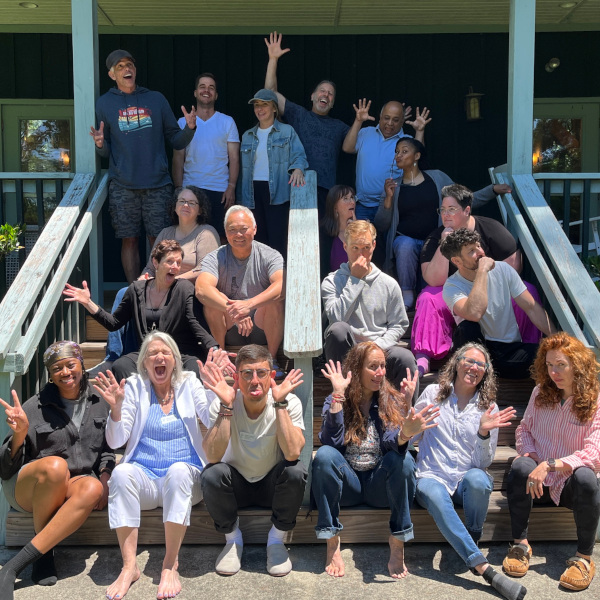
That made the training a useful companion to the conversations with Mia and Steve. Presence, at least as I’m learning it, is not about having the perfect question or moving someone quickly toward the right answer. It is about staying with what is actually happening long enough for something more honest to emerge. In that way, it felt like another version of this quarter’s lesson: the good stuff is not always on the other side of rigor. Sometimes it shows up when we stop performing long enough to return to what is right in front of us.
I continue to support various causes through quarterly contribution, which are now being tracked on this scorecard.
This quarter, I also gave presentations for the Medical Fitness Association and the Wellbeing Think Tank. In both talks, I went deep on the research around what keeps us engaged in healthy habits, and the conclusion is this simple: We don’t keep returning to what matters simply because it is important. We return when the pursuit gives us enough reason to come back.
After learning from Mia and Steve, this feels true well beyond health interventions. Life does what life does. We get tired. We miss days. The scorecard doesn’t always break our way. But when we can find some joy inside the pursuit, not just waiting for us at the finish line, we give ourselves a better chance of returning to, and staying connected with, the people, practices, and places that make a good life possible.
Warmly,
Mike Rucker, Ph.D.
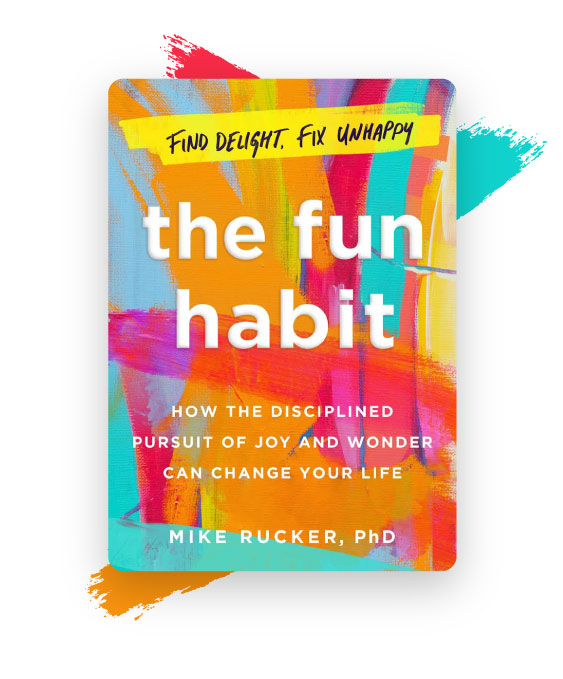
P.S. If you haven’t left a review for The Fun Habit and you’d be willing to, I would be grateful. It goes a long way in helping others discover the book.